Erlang AI Vision

Camera intelligence that
sees, thinks, and verifies.

ESP32 cameras see, the edge bridge thinks, and Qwen Cloud verifies — only real events reach your team, with no more scrubbing through CCTV footage.

AndroidAvailable WebAvailable 󰒾iOSComing soon
Cameras
Live camera fleet, agents, events, and Qwen verification
Front Door

Front door camera stream
Live MJPEG stream
Person detected
Qwen verification pending
Snapshot Pan Tilt

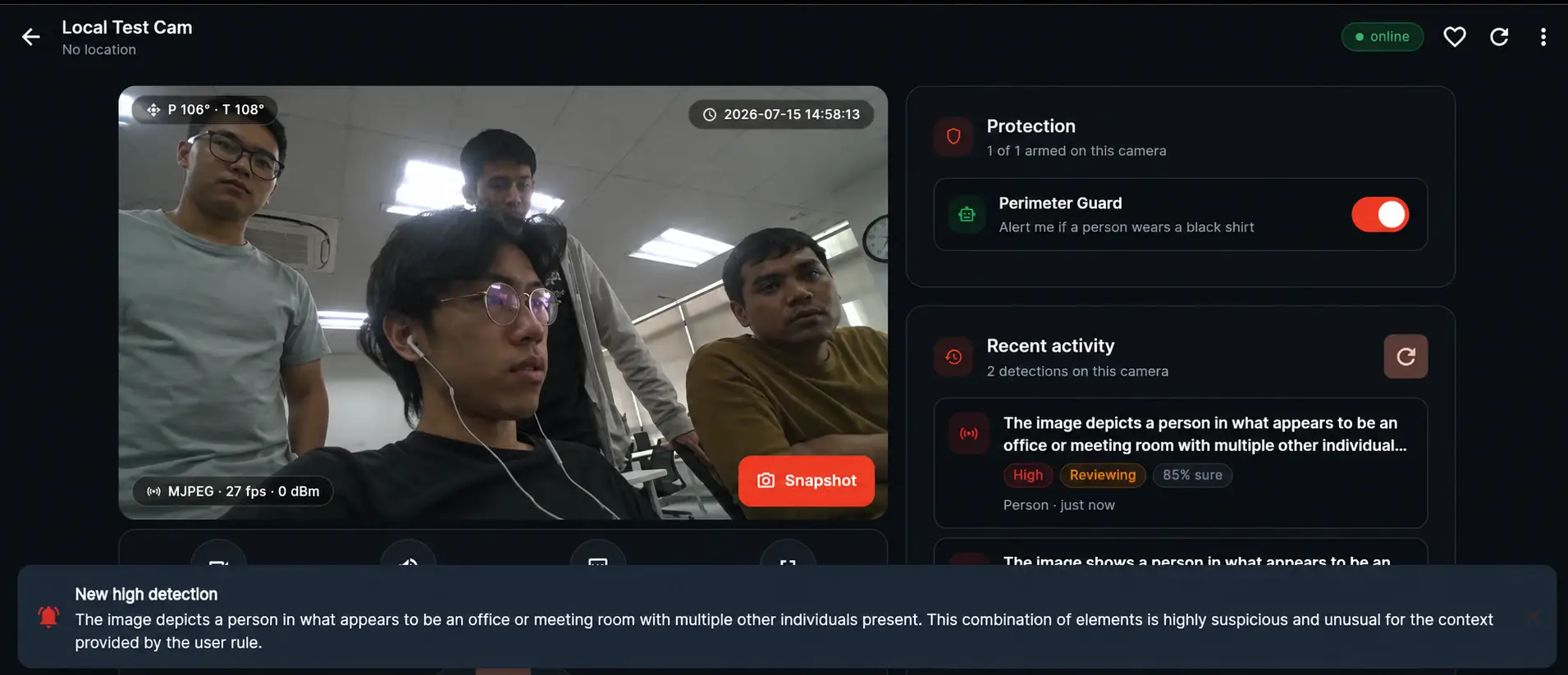
Protection agent armed
Alert when a person lingers near the front door after 10 PM.
Front Door
Person detection
Qwen audit trail
snapshotFetched live frame
panAdjusted camera angle
verdictNeeds review
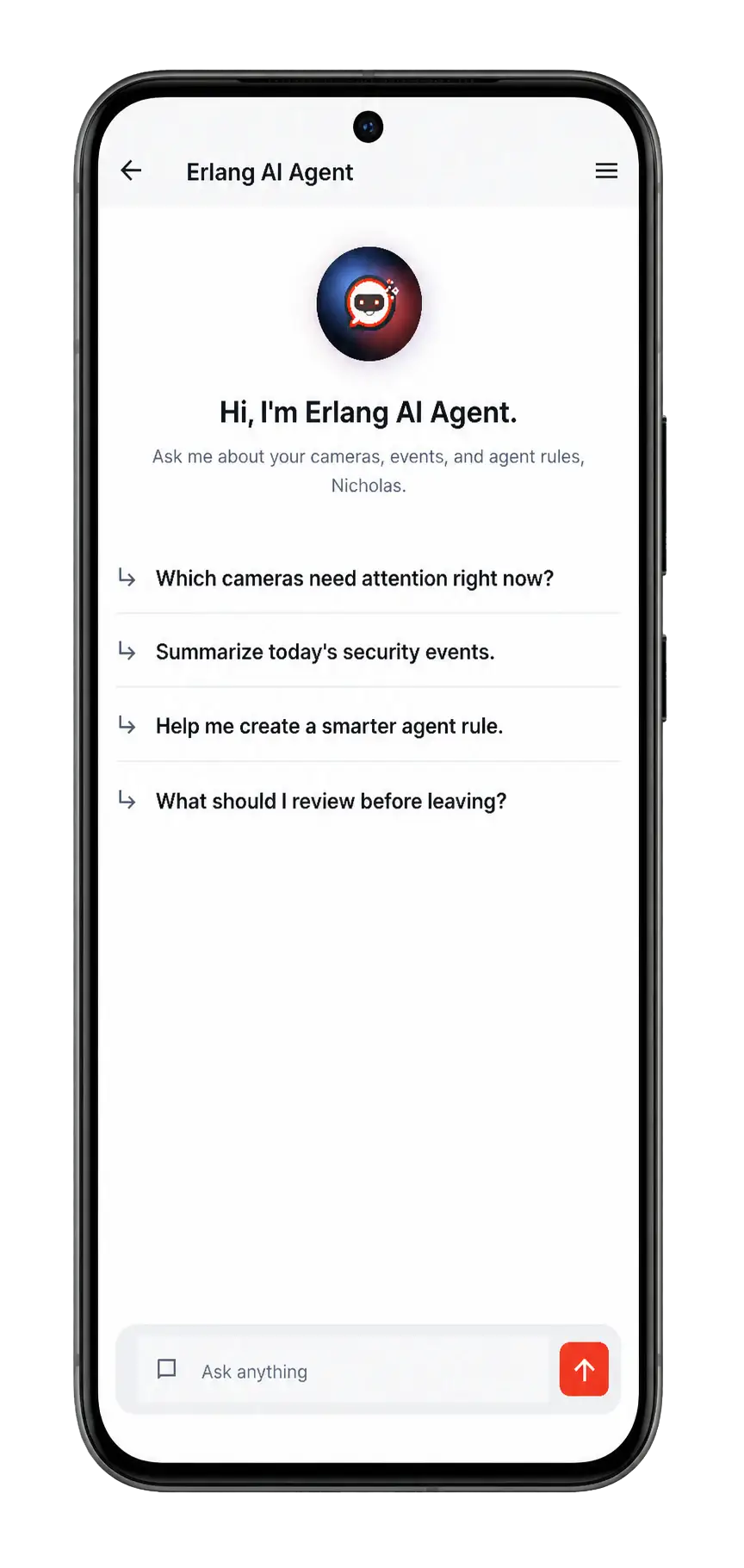
Erlang AI mobile agent chat

Real edge architecture

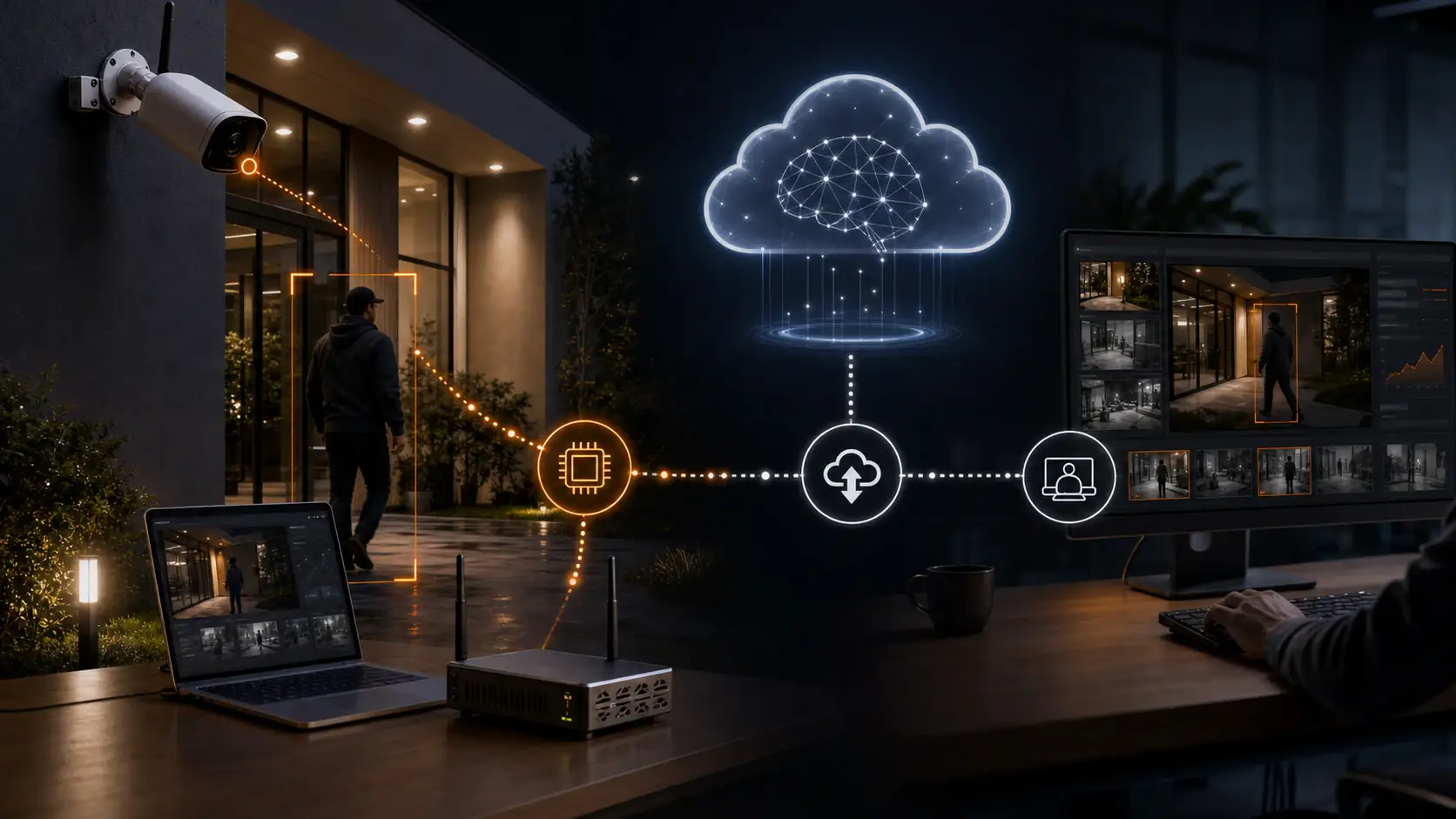
ESP32 cameras stream through a laptop edge bridge that detects events close to the source, before anything reaches the cloud.

󰢱

Qwen Cloud verification

Qualifying events are reviewed by Qwen Cloud, which reasons about the scene and confirms a real match before anyone is alerted.

󰘵

Operator console

Flutter web shows camera health, live streams, PTZ controls, agent assignment, realtime events, clips, and push alerts.

YouTube demo

See the full agent workflow in under two minutes.

Follow a camera event from local edge detection through Qwen verification, an auditable verdict, and the operator response.

󰂠YOUTUBE DEMO 󰂠
From natural-language rule to verified alert
Interactive demo available now. YouTube upload pending.
󰀴
Smart CCTV vs. agentic AI

Beyond detection: understand what actually matters.

Basic smart CCTV adds motion and object detection, but threshold-based models still confuse candidates with real incidents. Erlang AI Vision keeps edge ML for speed, then uses an AI agent to verify context, explain the verdict, and investigate before alerting you.

Architecture

From camera frame to verified alert.

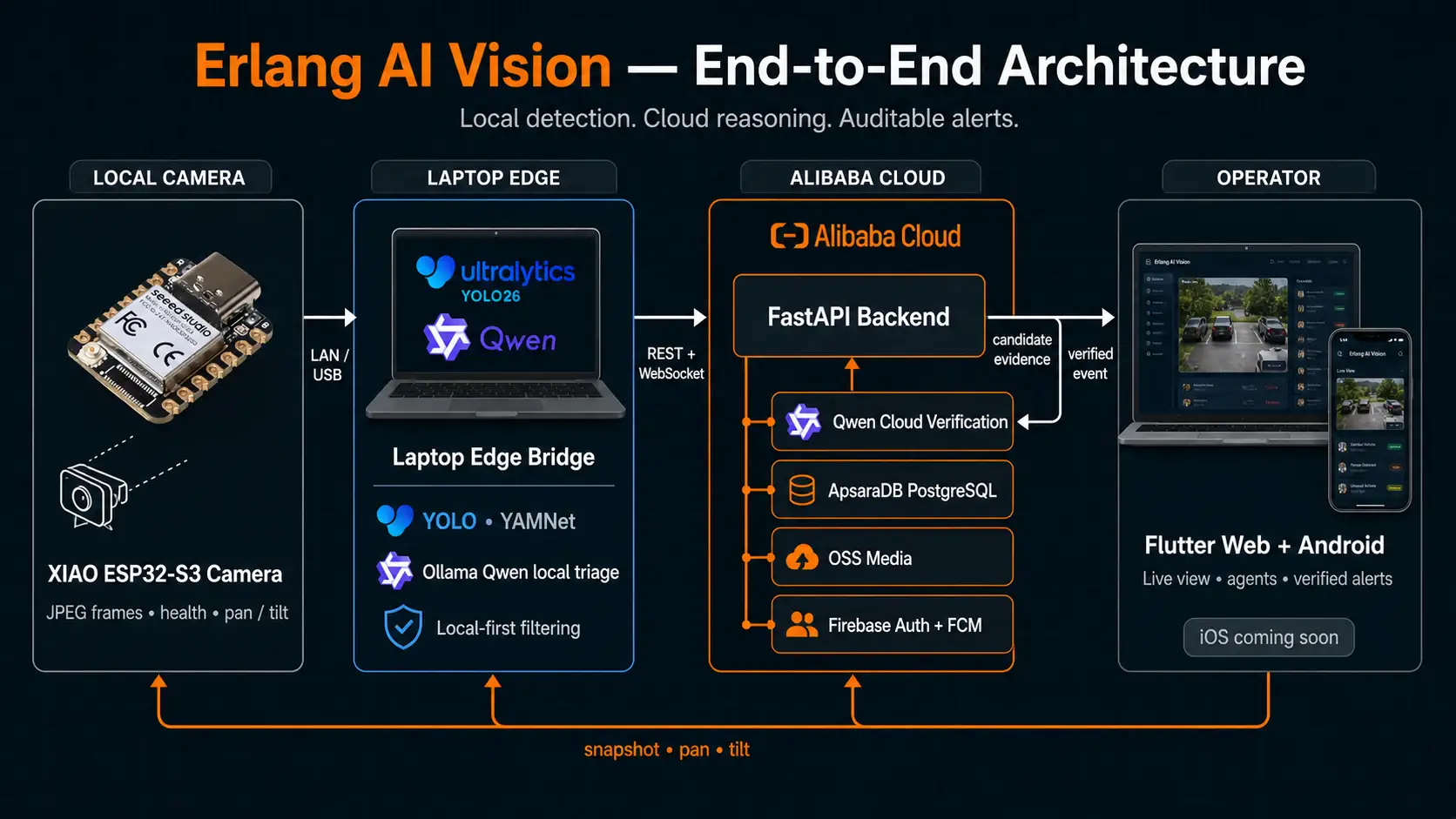
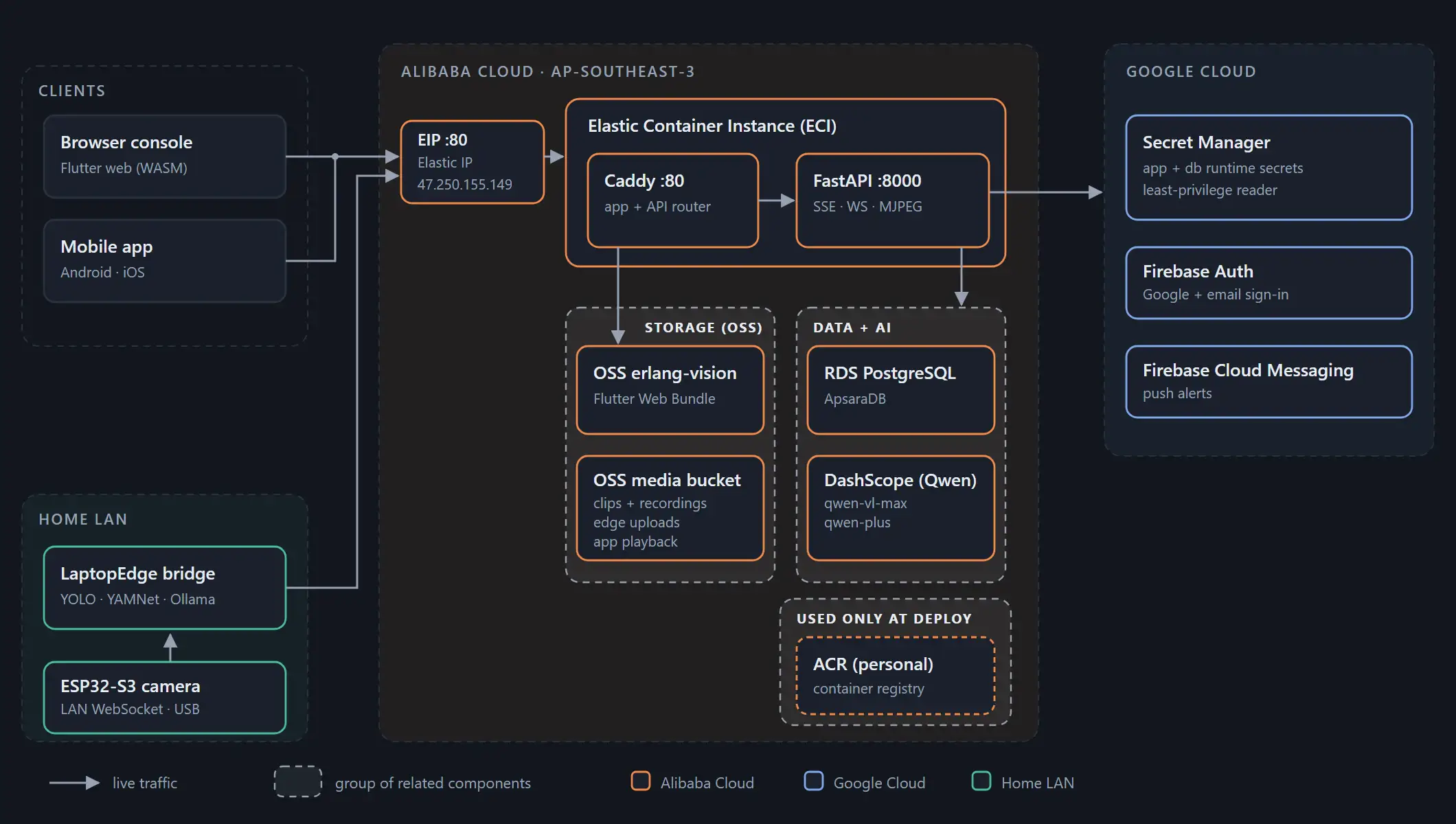
Cameras stay on your local network. The edge bridge is the only thing that talks to the cloud, and Qwen verifies every event before it becomes an alert.

End-to-end flow
Erlang AI Vision architecture flow
Cloud architecture
Erlang AI Vision cloud architecture
Use case impact

Security teams review moments, not hours of footage.

The product is built for front doors, corridors, storage rooms, and small-site monitoring where cheap cameras need better context before a human is interrupted.

Less manual review

Operators spend their time on confirmed incidents instead of watching uneventful feeds.

Privacy-aware edge filtering

Local detection reduces unnecessary cloud calls and keeps routine frames close to the camera path.

󰛤

Faster response loops

Operators can inspect, pan, tilt, and confirm events from the web console when something needs attention.

How it works

The agent investigates before it interrupts you.

When an edge detector flags a candidate, the event runs a three-stage pipeline. Qwen Cloud decides whether it truly matches your rule — gathering more evidence first when it helps — then returns an auditable verdict.

Stage 1

Edge detection

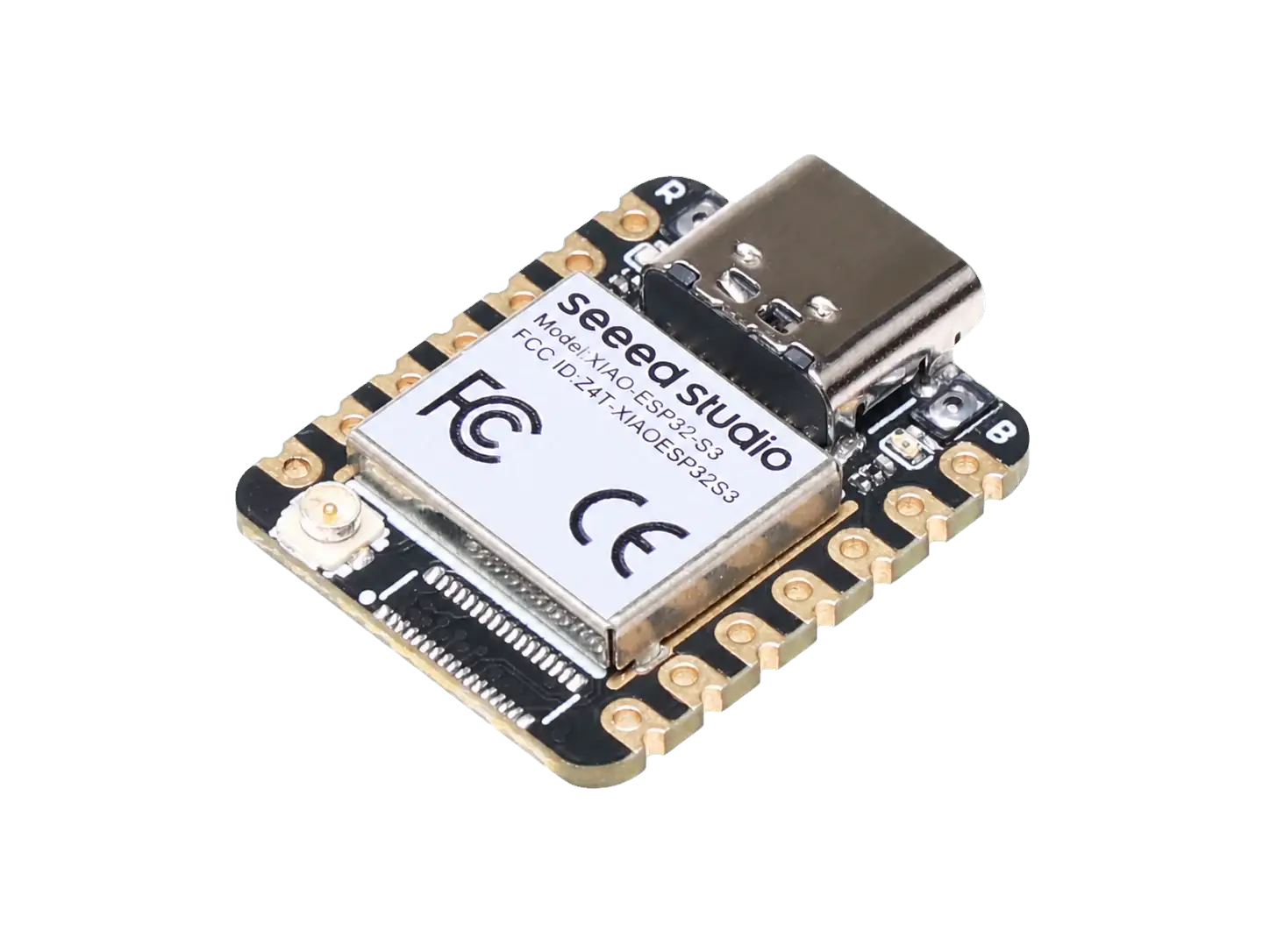
XIAO ESP32-S3 cameras capture events on-site and relay them to the laptop edge bridge.

Seeed Studio XIAO ESP32-S3 board
Stage 2

Local triage

Ultralytics YOLO filters visual noise locally so only meaningful candidates reach the cloud.

Ultralytics YOLO26
Stage 3

Cloud verification

Qwen on Alibaba Cloud reasons against your natural-language rule and issues the final verdict.

Alibaba Cloud Qwen

Tools the agent can call

Live snapshot Pan camera 󰘵Device status Recent events & clips

Every tool call is logged to the event’s audit trail.

Erlang AI Vision local event triage with protection rules, recent detections, and a high-priority alert
Qwen verdict
verifiedtrue
severityhigh
confidence0.92
recommended_actionnotify
summary: Person lingering at the front door after hours.
Project resources

Everything points back to the working product.

The landing page gives reviewers and teammates one place to understand the IoT setup, cloud architecture, source code, and login-backed console.

Source code

nickyui99/erlang-ai-vision-fullstack

Open the working repositories for the web app, backend, IoT camera firmware, laptop edge bridge, deployment scripts, and project documentation.

Edge sensors plus cloud reasoning